
Private by default · processed in your browser

Convert images
to vectors online.

Turn PNG, JPG, GIF, BMP, and WebP images into crisp, editable SVG, PDF, EPS, and DXF artwork—right in your browser.

INPUTPNGJPGGIFWEBPOUTPUTSVGPDFEPSDXF
START HERE

Drop an image to begin.

Or choose a file from your device. No account needed.

Drag & drop V Paste
PNG, JPG, GIF, BMP or WebP · up to 30 MB
Local processingReal vector pathsEditable colors5 export formats
SEE IT IN ACTION

Zoom past the pixels.

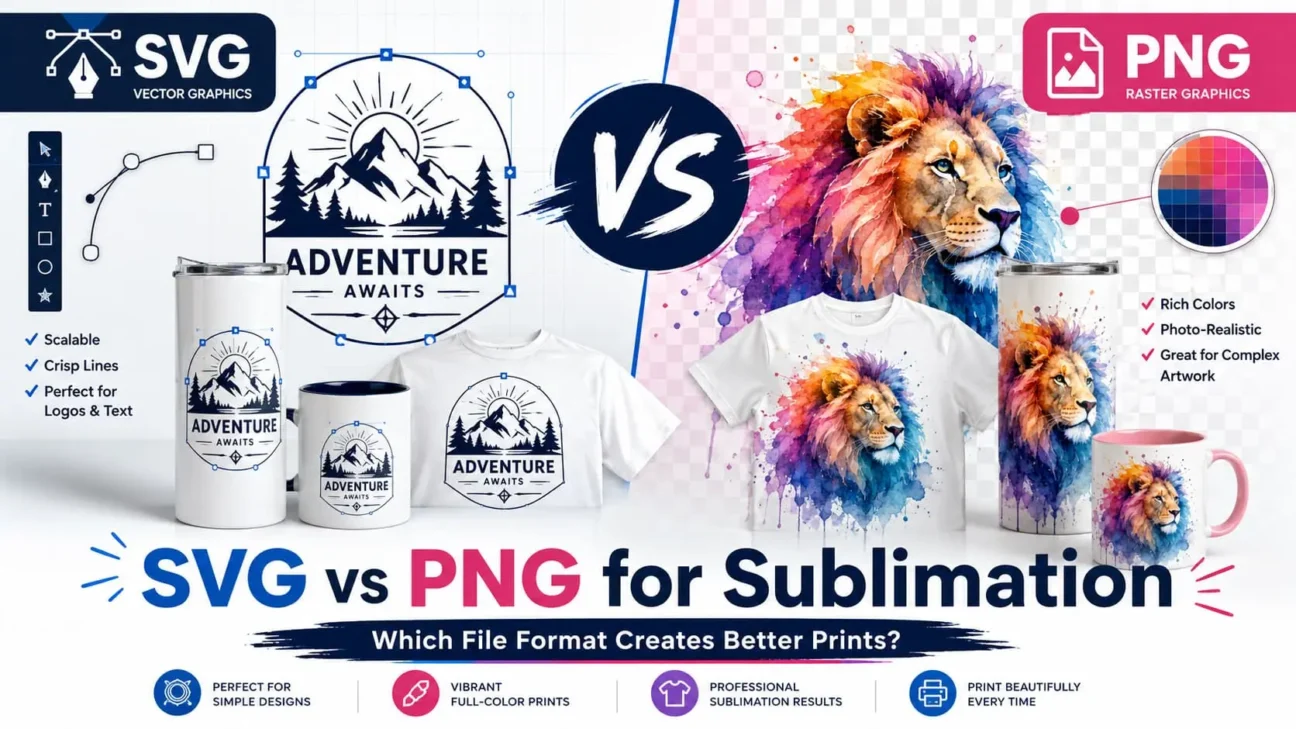
A raster edge is a grid of color values. A vector edge is geometry—so it stays sharp at every size.

PIXELSVECTORS
RASTER INPUT

PNGJPGGIFBMPWebP

VECTOR OUTPUT

SVGPDFEPSDXFPNG

HOW IT WORKS

Three steps. No learning curve.

01
PICK

Choose a bitmap.

Pick a bitmap image and drag and drop it onto the page, paste it, or choose it from your device.

JPEGs and PNGs are grids of little squares called pixels, each with its own color.

02
PROCESS

Turn pixels into geometry.

Vectorday analyzes colors and contours, then converts the image into editable geometric paths.

The result can scale to any resolution without becoming blurry—ready for print, cutting, embroidery, and more.

03
DOWNLOAD

Inspect, refine, export.

Compare the original and result in a full interactive preview. Adjust colors and detail if needed.

Download SVG, EPS, DXF, or PDF vector output, plus a cleaned PNG rendered from the paths.

FULL FEATURED

Serious tools.
Simple controls.

Everything you need for a clean first trace and a practical handoff—without requiring a desktop vector editor.

01

Vector Engine

A local tracing engine combines color quantization and contour analysis to turn raster pixels into editable paths.

02

Vector Graph

The output is a real graph of filled vector paths, so colors and geometry remain editable after export.

03

Full Shape Fitting

Compact closed paths preserve recognizable circles, rounded forms, lettering, and hard-edged artwork.

04

Curve Support

Straight edges and smooth curves are fitted where they best match the source, without embedding a hidden bitmap.

05

Clean Corners

Detail and smoothing controls help balance crisp corners with the noisy stair-steps found in raster edges.

06

High Performance

Processing runs directly on your device and is tuned for quick feedback on common logos and illustrations.

07

Consistent Geometry

Every contour is traced with the same settings so neighboring shapes remain visually consistent.

08

Adaptive Simplification

Reduce weak edge detail for cleaner paths, or preserve more boundary variation when the source supports it.

09

Palette Control

The palette range adapts to each image’s detected colors and resolution, then keeps every resulting swatch editable.

10

Sub-Pixel Precision

Anti-aliased pixels inform the traced contour, producing smoother boundaries than a literal pixel-grid outline.

11

Fully Automatic

A complete first result is produced automatically. Refinement controls stay optional.

12

Image Types

Use PNG, JPG, GIF, BMP, or WebP logos, sketches, scans, illustrations, and photographic references.

13

Pre-Crop

Trim unwanted edges before tracing so the available processing resolution is spent on the artwork you need.

14

Color & Transparency

Full-color inputs and alpha transparency are preserved throughout the browser-based workflow.

15

Export Choices

Save SVG, PDF, EPS, or DXF vector output, plus a cleaned PNG rendered from the final paths.

EXPORT YOUR WAY

One trace.
Five useful files.

Choose a design, print, or cut-path profile, then fine-tune grouping, sizing, and corner joins before download.

01SVG

Web, apps & editing

02PDF

Print & documents

03EPS

Professional print

04DXF

CAD, CNC & cutting

05PNG

Clean raster output

QUESTIONS, ANSWERED

Before you trace.

01Is Vectorday actually vectorizing my image?+

Yes. The SVG output contains traced path geometry and fills, not an embedded copy of the original bitmap.

02Which files can I upload?+

Vectorday accepts PNG, JPG, GIF, BMP, and WebP images up to 30 MB. Animated images use the frame decoded by your browser.

03Does my image leave my device?+

No. In this version, decoding, cropping, tracing, previewing, and exporting all happen in your browser session.

04What should I use it for?+

It works best for logos, icons, lettering, flat illustrations, sketches, scans, and artwork with clear color boundaries. Photographs can work, but usually create more complex paths.

05Which export format should I choose?+

SVG is the most flexible default. PDF and EPS suit print workflows, DXF is useful for CAD and cutting, and PNG gives you a cleaned raster copy.

READY WHEN YOU ARE

Make pixels
infinitely scalable.